Respiratory Protective Devices (RPD) and Assigned Protection Factors (APF)
Knowing what Protection Factors are and how they help you make an informed decision when selecting the appropriate respiratory protection for your work, task, or hazard. In short, respiratory protective equipment (RPE) is designed to keep a wearer safe when working in an airborne hazardous environments.
What is an Assigned Protection Factor (APF)?
An Assigned Protection Factor (APF) is a numerical rating that indicates the minimum level of protection a respirator is expected to provide to trained workers in the workplace. In Australia, APFs are defined under AS/NZS 1715:2009 and are used to select the correct respiratory protective equipment (RPE) based on the level of airborne contamination in a workplace.
Protection factors have been assigned to take the guesswork out of what is appropriate. So what are they?
Workplace Protection Factors: How does a respirator perform in real-world situations, doing actual tasks?
Assigned Protection Factor: Theoretical protection based on how many times a respirator should reduce the contamination for a wearer, based on lab testing.
Fit Factors: What a respirator scores during a fit test based on how well it seals to the wearer's face (does it fit) to ensure the intended protection.
Demonstrating awareness of workplace exposure standards is essential when selecting respiratory protective equipment (RPE). In Australia, Workplace Exposure Standards (WES) published by Safe Work Australia define the maximum airborne concentration of hazardous substances that workers may be exposed to, typically expressed as an 8-hour time-weighted average and, where applicable, a short-term exposure limit. These standards are used during risk assessment to determine whether airborne contaminant levels pose a health risk and whether additional controls are required.
When engineering or administrative controls cannot adequately reduce exposure below the WES, RPE must be selected to provide sufficient protection. This involves calculating the level of protection required to reduce the worker’s exposure to below the standard, then choosing a respirator with an appropriate Assigned Protection Factor and ensuring it is properly fit tested, maintained, and used within a structured respiratory protection program.
Understanding WES values therefore directly informs hazard evaluation, respirator selection, and verification that risks are being controlled so far as is reasonably practicable.
To gain a further understanding, you can read more as we unpack the topic in greater detail.

How are these protection factors established?
First, RPE needs to be established for the following:
Right for the wearer
Right for the hazard
Right for the task
Equipment limitations must be considered.
When working with respirable crystalline silica (RCS) dust, the government deems your Workplace Exposure Standard (WES) to be 0.05mg/m³ over an 8-hour time weighted average (TWA) day.
This means that at no point should a worker be exposed to more than 0.05 mg/m³ in their working day. Again, that measurement is 0.05 milligrams per cubic meter of air.
In July 2020, the exposure was reduced from 0.1 mg/m³ to 0.05 mg/m³ due to an increasingly high volume of silicosis claims.
So, how do we establish the appropriate respiratory protection for workers in varying levels of respirable crystalline silica dust and other harmful substances? Firstly, we refer to a respirator's assigned protection factor.
When it comes to your respiratory protective equipment (RPE), you would only be required to wear RPE due to some known airborne contamination recognised in the workplace that exceeds a person’s exposure limit and poses potential health risks.
Some airborne contamination may include chemicals, gases and vapours, fibreglass, dusts, silica dust, asbestos, pesticides, even viruses and diseases.
These can be due to certain working environments, anywhere from:
Construction
Demolition
Tunnelling
Mining
Agriculture
Fumigators
Hospitals
Potential airborne hazards:
Dusts
Fumes
Gases
Vapours
Mists
Smoke
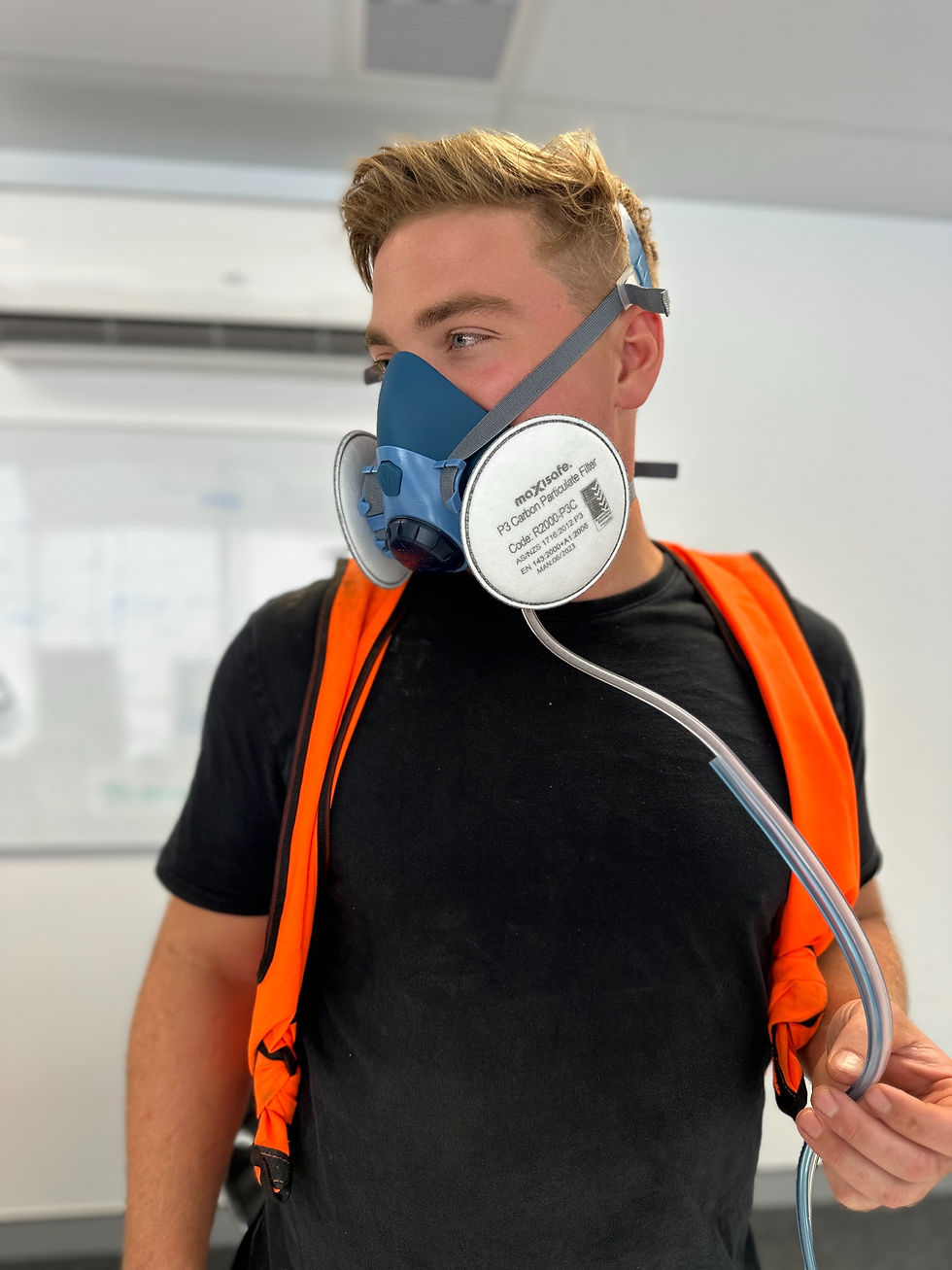
These hazards can cause a worker irreversible long-term health effects. Whatever the workplace hazard may be, a risk assessment should be conducted to estimate a worker’s exposure to hazardous airborne substances. Based on known exposures, suitable RPE will be selected with the sole purpose of keeping that worker protected.
The purpose of your RPE is to reduce airborne contamination so that a worker can continue to work safely in a hazardous environment with minimal risk of exceeding workplace exposure standards (WES) (soon to be known as workplace exposure limit (WEL)) and incurring an occupational illness.
How are APF values determined in Australia?
Respirators are grouped by type and class, and each is given an Assigned Protection Factor (APF). This number shows how much a respirator can reduce a worker’s exposure to harmful substances.
Internationally, RPE protection factors vary. In Australia, our APFs are categorised as 10, 50, 100 and 100+.
3M has a great graph that shows how the different styles and models of RPE achieve their assigned protection factors. Please note it is an American table so the assigned protection factors (APF) will be different to the Australian APF. Below is a guide. Australia aligns with OSHA 1910.134 (the far right column).
The AS/NZS 1715:2009 standard defines APF as: “A measure of the degree of protection afforded by the respirator, defined as the ratio of the concentration of contaminant outside the respirator to that inside the respirator.”
The assigned protection factor (APF) is determined by the respirator type + the selected filter medium (%).
Respirator Type | APF (Australia) | Fit Factor Pass Required |
Disposable P2/N95 (FFP2) up to | 10 | 100 |
Half-face reusable elastomeric up to | 10 | 100 |
Full-face elastomeric with P2 filters up to | 50 | 500 |
Full-face elastomeric with P3 filters up to | 100 | 1000 |
PAPR / airline supply (tight-fitting) up to | 100+ | 1000 |
When you use a P3 filter on a half-face respirator, the APF does not increase; it remains 'up to 10'. However, when you attach that same P3 filter to a full face, you can increase the APF from 50 to 100.

Pictured below is the guide from the AS/NZS 1715:2009 standards on how particle filters are rated with different types of respiratory protective devices (RPD) and afforded their assigned protection factor classes. The graphs below are examples of both mechanically and thermally generated particles and how you should select the correct respirator and filter combination to achieve suitable protection.
Table 1 - Mechanically generated particulates (grinding, blasting, sanding, silica dust, coal dust, asbestos fibres, lead dust)
Required minimum protection factor | Suitable RPE |
Up to 10 | P1 or P2 disposable respirator; half-face with P1/P2/P3 filter |
Up to 50 | Full-face respirator with P2 filter; PAPR with P2 or P3 filter |
Up to 100 | Full-face respirator with P3 filter |
100+ | PAPR with P3 filter and full facepiece or head covering; air-line respirator |
Table 2 - Thermally generated particulates (welding fumes, smoke, fume from molten metal)
Required minimum protection factor | Suitable RPE |
Up to 10 | P2 disposable respirator; half-face with P2 filter |
Up to 50 | Full-face respirator with P2 filter; PAPR with P2 filter |
Up to 100 | Full-face respirator with P3 filter; PAPR with P3 filter |
100+ | PAPR with P3 filter and full facepiece or head covering; air-line respirator |
By referencing the Assigned Protection Factors (APFs), a PCBU or employer can select respiratory protective equipment (RPE) based on its ability to provide the appropriate protection required to reduce workers' exposure below the Workplace Exposure Standards (WES).
What APF do I need? How to calculate your minimum protection factor
To determine the appropriate RPE referring to assigned protection factors (APF) you need to start by identifying the type of airborne contaminants present and the level of concentration in your workplace.
To establish the potential risk to workers, a thorough risk assessment conducted by either an internal Work Health and Safety (WHS) officer or, for more complex or high-risk environments, an Occupational Hygienist would be better suited to establish the following:
Workplace airborne concentration ÷ workplace exposure limit (WEL) – formally known as a workplace exposure standard (WES).
You have to calculate the minimum protection factor required in order to understand what RPE will be most suitable.
It is the respirators’ ability to reduce the contamination to acceptable levels that provides us with the ‘minimum protection factor (MPF)’. – Credit AS/NZS 1715:2009.
AS/NZS 1715:2009 standards 4.2.2.2 state: A respirator shall be selected to ensure that the exposure level is reduced below the accepted level.
APF = How many times the respirator reduces the airborne contaminant.
Example 1
An APF of up to 10 means that the respirator should reduce exposure to 1/10th of the airborne contaminant.
Measured silica dust level: 0.10 mg/m³ WES: 0.05 mg/m³
Calculation: 0.10 ÷ 0.05 = 2
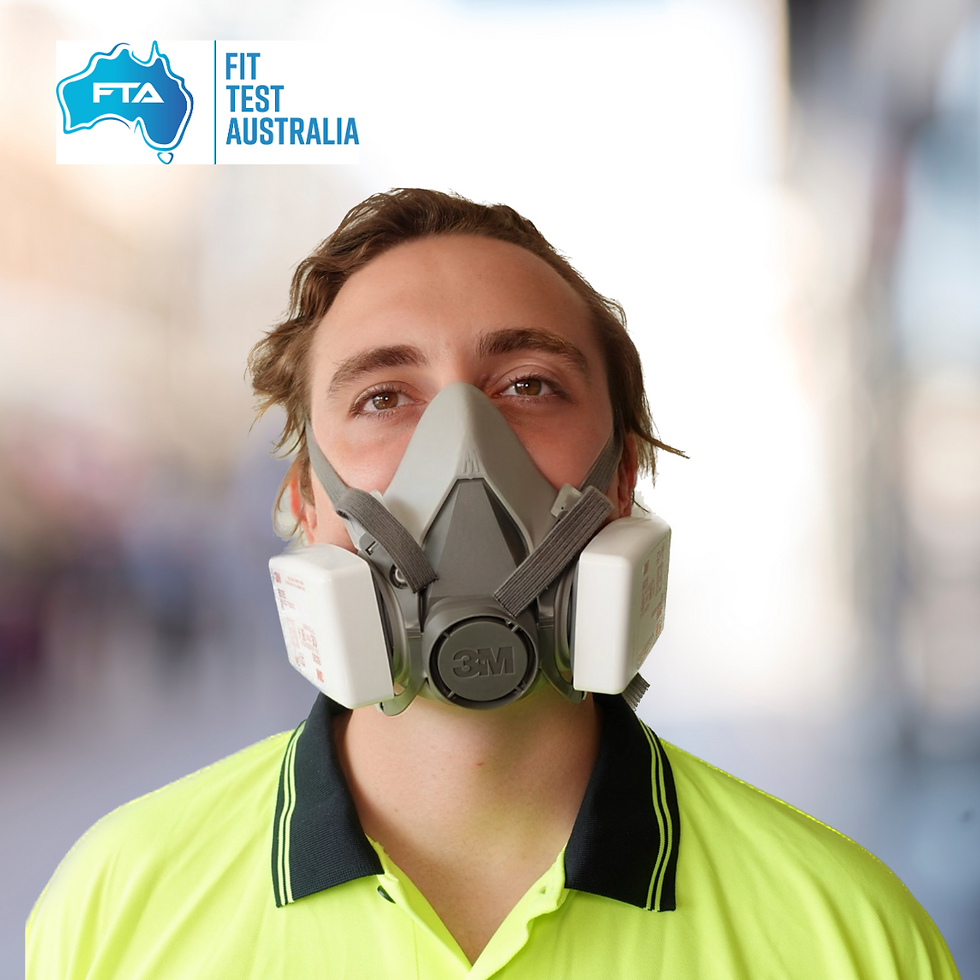
The appropriate RPE would have a minimum APF of 10. Use a P2 disposable or half-face reusable respirator (with fit testing, training, and worn clean-shaven).
Example 2 - what if the measured level was higher?
Let’s say the exposure was 1.0 mg/m³:
Calculation: 1.0 ÷ 0.05 = 20
Now you're well above the APF 10 threshold.
You will need to move up to RPE with an APF of 50, which means a full-face respirator with P2 filters. P2/P3 filters on a powered air-purifying respirator (PAPR) with a loose-fitting hood or helmet for individuals with facial hair.
Example 3
Measured silica level: 0.25 mg/m³ WES: 0.05 mg/m³
Calculation: 0.25 ÷ 0.05 = 5
You can choose RPE with an APF of up to 10, a range of half-face reusable, or a P2 disposable is acceptable.
When conducting a quantitative fit test (QNFT), the ‘fit factor (FF)’ is not to be compared with or against the APF. The fit factor demonstrates the compatibility of the respirator to the wearer by showing the ambient air outside the respirator against what was detected on the inside of the respirator due to leakage from damaged RPE or poor fit.
What is a Workplace Protection Factor (WPF)?
The Workplace Protection Factor (WPF) tells us how much real-world protection a respirator provides during actual job tasks. Unlike lab tests or fit testing, WPF is measured while the respirator is worn on-site, under the pressures of everyday work.
A WPF is established in Australia by assessing respirator performance in real-work working conditions based on workplace studies. The RPE is measured for recognised contamination outside the respirator to what’s inside the respirator while worn in specific working environments.
WPF goes beyond theory. It assesses how respirators perform in actual work environments, taking into account human movement, environmental stressors, and fit variability. That’s why it’s often regarded as the most practical benchmark for evaluating whether respiratory protection is genuinely working on the job during day-to-day use.
As the degree of protection afforded by the respirator increases, the WPF increases.
WPFs will be different from person to person, job to job, and task to task, unlike APFs, which are set values from standards like AS/NZS 1715:2009. Used in research and risk assessments, WPFs are not for regulatory compliance (that’s what APFs are for).
Workplace Protection Factors (WPF) values help develop and make up the Assigned Protection Factor (APF) values (expected in practice).
Any task that exceeds the WES (Workplace Exposure Standard) or where airborne hazards cannot be controlled through engineering or administrative controls, suitable RPE must be provided. The type of respirator must match the nature and concentration of the hazard; high exposure means a higher APF is required.
What is a fit factor in respirator fit testing?
A fit factor (FF) is a numerical value that helps validate the respirator's APF for the wearer. Fit factors must provide a minimum pass to be deemed suitable for the wearer. Fit factors measure the ambient air outside of the respirator and measure it against what leakage was detected inside - the ratio between the two produces the final pass or fail result.
A safe buffer is applied; the general rule is that whatever the APF is for a respirator type, you then TIMES IT BY TEN to determine the fit factor pass result when quantitative fit testing (QNFT).
It’s important to note that whatever fit factor is achieved during a mask fit test, the FF results do not override the APF. It is purely to ensure the respirator is ‘fit for purpose’ for the wearer at the time of testing, as it challenges the seal in motion. The Fit Factor should never be used as if it were a Workplace Protection Factor.
Fit factors broken down:
Filtering facepiece respirators FFP2 (disposable) known as a P2 or an N95 are required to achieve a FF of 100.
Half-face elastomeric (reusable respirator) is required to achieve a FF of 100.
Full-face elastomeric (reusable respirator) will be required to achieve a FF of 500
Full face elastomeric (reusable respirator) used with higher airborne concentrations can be set to achieve a FF of 1000
The Australian standards state that, for best practice, you can adopt the 1000 FF for full face
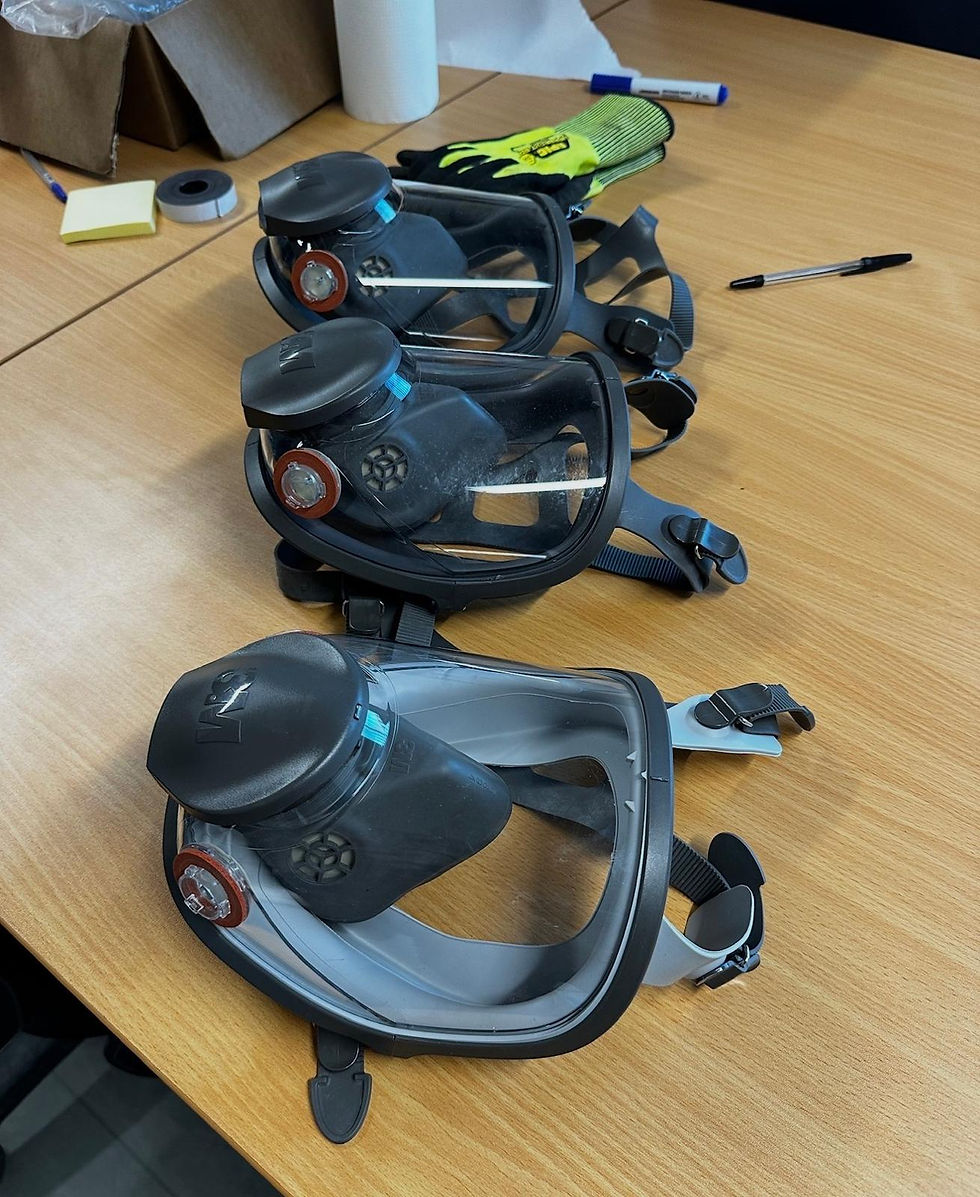
respirators. Fit Test Australia has adopted that best practice for all full-face respirators that we fit test, as we cannot be sure of workers' exposure at the time of testing. We provide respirator fit testing across clinics in NSW, VIC, WA, QLD and SA.
For all disposable respirators (P2/N95), a FF is capped at 200+ (the highest score achieved) displaying that an adequate seal was maintained throughout the fit test.
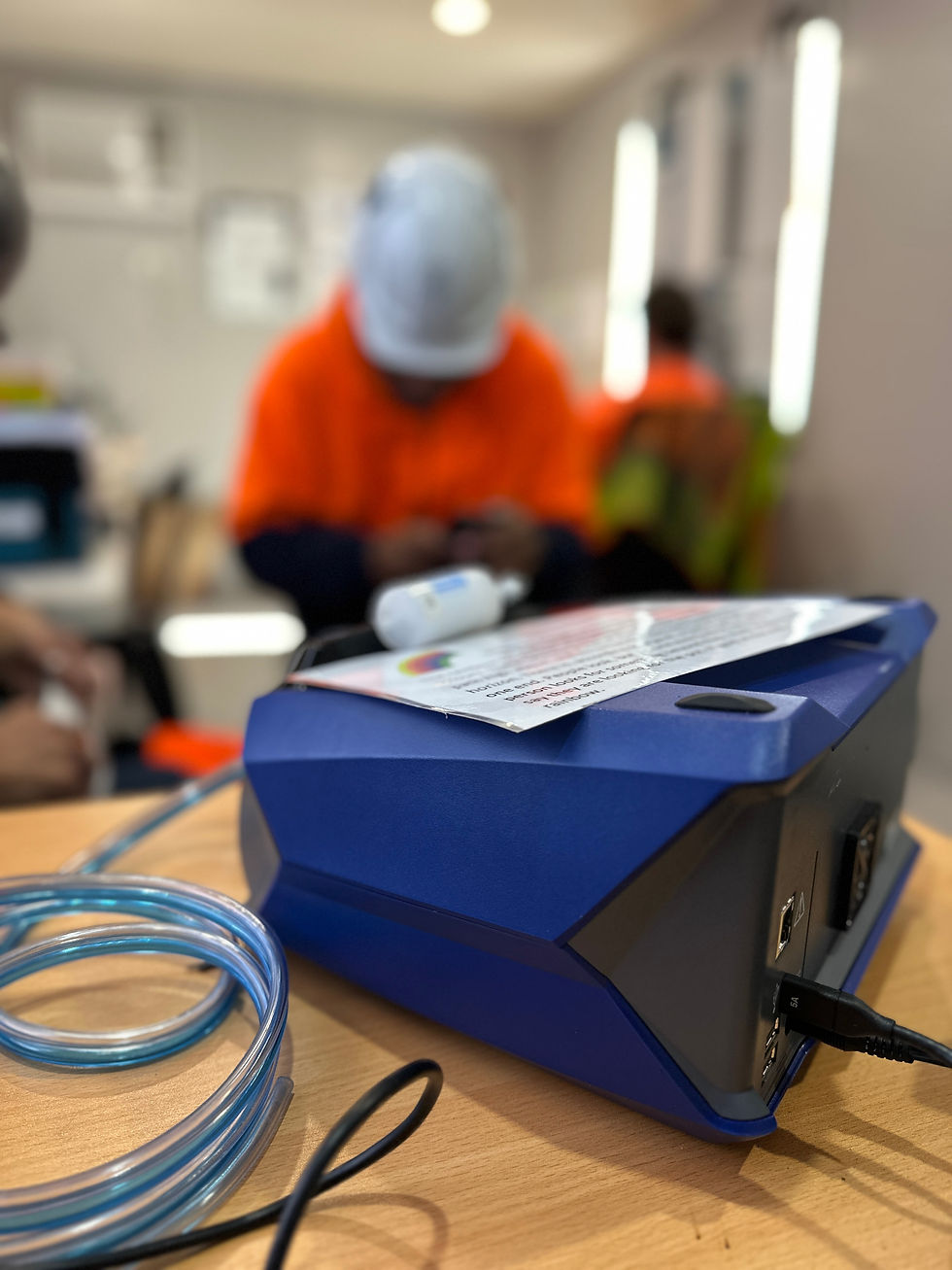
All half-face and full-face reusables will typically display varying fit factor (FF) results with no real limit to what they can score; this can range from the hundreds to the thousands. You can read more about fit factors here.
How APF, WPF, and fit factor work together
The higher the fit factor score at the end of the test, the more compatible the respirator was to that particular wearer at the time of the test.
APF - given based on lab data and the theoretical protection a respirator type provides.
Fit factor - confirms the compatibility of the respirator with an individual's features. A fit test confirms that the APF is achievable for that specific person.
WPF - summarises RPE protection in real-world working conditions, factoring in practical use.
These three factors work together to ensure that the respirator selected is not only theoretically appropriate for the hazard, but physically suited to the wearer and proven to perform in real working conditions.

If you require additional information, you can contact Fit Test Australia Pty Ltd via email - info@fta.net.
Your health and safety is our business.
Call: 0440 138 105
Email: info@fta.net.au


