HEALTHCARE RESPIRATOR MASK FIT TESTING P2/N95
Updated: Feb 26
Clearing the air around healthcare and student clinical placement respirator mask fit testing.
If you are a healthcare worker or student about to go on clinical placement, this article hopes to provide you with some clarity and answer all the questions you have around the requirement to undergo a respiratory mask fit test or update an expired fit test certificate.
Here are the questions we will be answering in this article:
If you're a nursing or allied health student specifically, read our dedicated guide: Mask Fit Test for Students.
For starters, we all know too well that Covid-19 highlighted to importance of our Personal Protective Equipment (PPE). In particular, the pandemic brought attention to the correct use, fit checking and fit testing of P2/N95 respirators in the healthcare sector.
Has Fit Testing Only Been Around Since Covid-19?
It is important to note that a respirator mask fit test is not a 'new thing’ that popped as a response to Covid-19. Respirator mask fit testing is a global practice and has been around for many years dating back to the 1990's, Australia has been fit testing for about 15 years, more commonly in the mining industry and those working with asbestos.
In Queensland it is legislated that anyone wearing a respirator must undergo a fit test prior to using a respirator in the workplace. This applies for all industries, healthcare included.
N95 and P2 masks are actually respirators and fall under this government legislation.
Queensland hospitals have been fit testing their healthcare workers for over 10 years. South Australia, recognised as the “state of excellence,” adopted fit testing within hospitals as a better practice for their healthcare workers about 10 years ago (exact dates unknown for both states).
Why Didn't Other States Fit Test Their Healthcare Workers?
Other states throughout Australia relied on “fit checking” as their preferred method to ensure a respirator is being worn correctly. Fit checking is an essential guide to ensure you have put on your N95/P2 correctly and moulded it to your face appropriately. This step is required each time you don your respirator prior to becoming patient facing or working in certain wards such as ICU, respiratory ward and Emergency Department (ED). Fit checking, should never replace fit testing.
Before every shift where respiratory protection is required, healthcare workers should perform a seal check to confirm they've donned the mask correctly. Read our guide on what a mask seal check involves and whether it's reliable.

A fit test should be the first step in determining if a mask is the correct size, make or model for the wearer prior to initial use in the workplace. Once you have successfully passed in a fit test in a particular P2/N95 respirator/s , you should only use those types moving forward.
It is safe to say that Covid-19 did highlight the need for all healthcare facilities to adopt fit testing as a better practice so workers know what P2/N95 is appropriate for them to wear.

Why Do I Need A P2/N95 Respiratory Mask Fit Test?
Since the implementation of fit testing within hospitals across Australia during the pandemic, it has remained as a better practice with the ongoing requirement for all workers, volunteers and students to undergo a respirator mask fit test and renew it annually as per the AS/NZS1715:2009 standards.
Not sure what happens on the day? Read our guide: What to Expect During Your Mask Fit Test.
The Department of Health Victoria has a great document that outlines some key points for repeat testing for health service organisations and their healthcare workers.
Why Does State To State Vary Around The Types Of P2/N95 Being Tested?
Each state is governed by Its own HealthShare, they all vary in some degree when it comes to the respiratory masks they procure (this means order in) and use, this is why state to state the P2/N95 respirators can be a little different. HealthShare also sets the requirement to be fit tested and passed in a certain number of masks with some of the common reasons listed below:
Hospitals and other private practices often change their internal supply/order of masks.
On occasion some brands may be recalled.
There may not be an even spread of all the masks across the wards.
Supply of masks can sometimes pose an issue.
Local inventory may vary from hospital to hospital as well.
Due to these varying factors, most HealthShares’ across Australia have set the requirement for anyone entering their facilities to receive a pass in x 2 P2/N95 respirators factoring in these points (some states may vary in the specified number of masks to achieve a pass in).
Please note: Private hospitals and private practices do not fall under these same guidelines and may have their own order of doing things.
As an example, this NSW algorithm is set to assist the fit tester on how to conduct the fit testing.

Are The P2/N95 Respirators The Same In Each State?
The simple answer is no. Different states have different P2/N95 respirators within their procurement, meaning, they may have slightly varied options on their algorithm and hospitals. There are some common masks which can be found across most states such as:
3M 1870+
3M 1860
Trident P2
Halyard Fluidshield
Other brands that may be seen in different states are the Detmold, Care Essential, Softmed A-Med, and BYD to name a few.
Below is an example of the HealthShare NSW preferred masks.
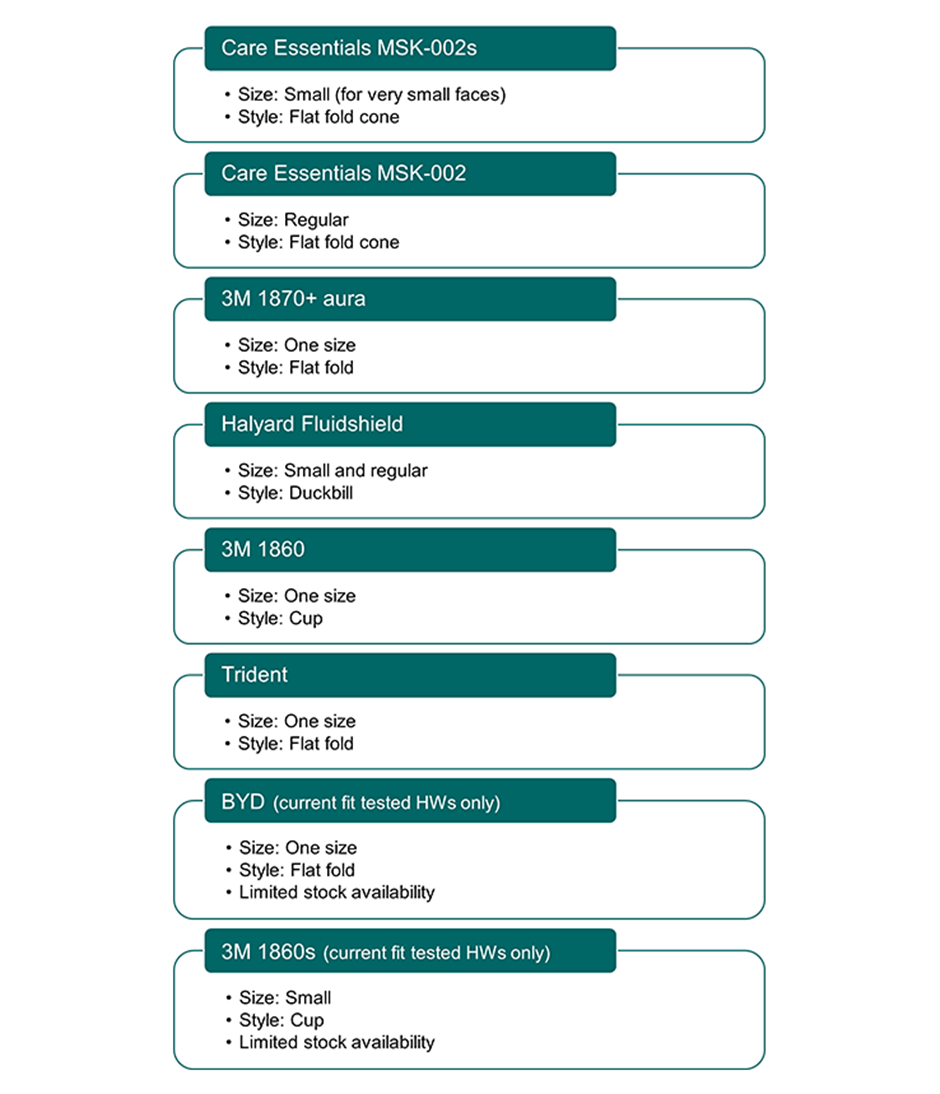
Undergoing a fit test into brands not specified on their algorithm will equate to the results being redundant. Why? Because each state only stock about 6 respiratory masks as shown above, if you have a fit test certificate in anything other than what is listed for your state, it will not be available on ward for you to reach for and use. This can also result in your fit test certificates being rejected and the individual still needing to book another fit test into the specified masks for the state you will be working or doing clinical placement.
Why Do I Have To Pay For A Mask Fit Test?
Hospitals conduct fit testing internally for their own staff as it is their responsibility to do so, with some hospitals even fit testing local police and paramedics. With the overwhelming number of internal staff to annually fit test, hospitals have limited availability to provide the service to new employees, volunteers and students.

This is where they may request anyone falling into these categories to outsource the service and provide proof of that fit test to be recorded on the ClinConnect database prior to entering the facility. All private companies that provide the service of respiratory mask fit testing will attach a fee for the service.
How Do I Book A Healthcare or Student Clinical Placement Fit Test?
Fit Test Australia (FTA) advises following all HealthShare recommendations, our Student Placement booking is set up to accommodate just that, a pass in x 2 P2/N95 respirators.
Healthcare workers, volunteers and students who need an P2/N95 mask fit test should select our student placement option.
Frequently Asked Questions
Q: Do Healthcare Workers Need a Fit Test Every Year?
Yes. Under AS/NZS 1715:2009, fit testing must be conducted before a worker first uses a respirator and renewed at least annually thereafter. This applies to all healthcare workers, volunteers and students who wear tight-fitting P2/N95 respirators in clinical settings. Some HealthShares may have specific requirements beyond this baseline - always check with your facility.
Q: What Masks Does Fit Test Australia Test for Healthcare Workers?
FTA tests the HealthShare-approved P2/N95 masks for your state, which commonly include the 3M 1870+, 3M 1860, Trident P2 and Halyard Fluidshield, among others. Because HealthShare procurement varies by state, the specific masks available at your appointment will be aligned to the approved list for your location. Contact us if you're unsure which masks you need to be tested in.
Q: Can I Use My Fit Test Certificate at Any Hospital in Australia?
Generally yes, provided you were tested in the masks on your state's HealthShare-approved list. A fit test certificate showing a pass in masks not stocked by your facility is unlikely to be accepted. This is why it's important to book with a provider like FTA who tests in the correct state-specific masks and issues certificates that align with ClinConnect requirements.
Q: What Is ClinConnect and Why Does My Fit Test Need to Be Recorded There?
ClinConnect is the clinical placement management system used across NSW and some other states to track compliance requirements for students entering healthcare facilities. Fit test results need to be recorded on ClinConnect before students can commence placement. FTA issues certificates and pocket ID cards immediately after your appointment, which you can use to update your ClinConnect record.
Q: What Happens if I Fail My Healthcare Fit Test?
If you don't achieve a pass in a particular mask, FTA will try additional mask models from the approved list to find one that seals correctly to your face. Most people will pass in at least one of the tested masks. If you fail all available options, FTA will advise on the next steps, which may include discussing PAPR options with your facility if tight-fitting respirators are genuinely unsuitable for your facial structure.
Q: Can Healthcare Students With Beards Get Fit Tested?
Yes, in certain circumstances. NSW HealthShare accepts the Singh Thattha beard wrap technique for healthcare workers and students who cannot shave for religious or medical reasons. This involves wrapping the beard tightly so the N95 mask can form an adequate seal. Contact FTA before your appointment to discuss this option and confirm whether your state's HealthShare accepts the technique.
Your health and safety is our priority
Call: 0403 064 064
Email: info@fta.net.au


